 80-20+
What is the Rule of Law?
Like a sound roof, the rule of law goes unnoticed until it fails.
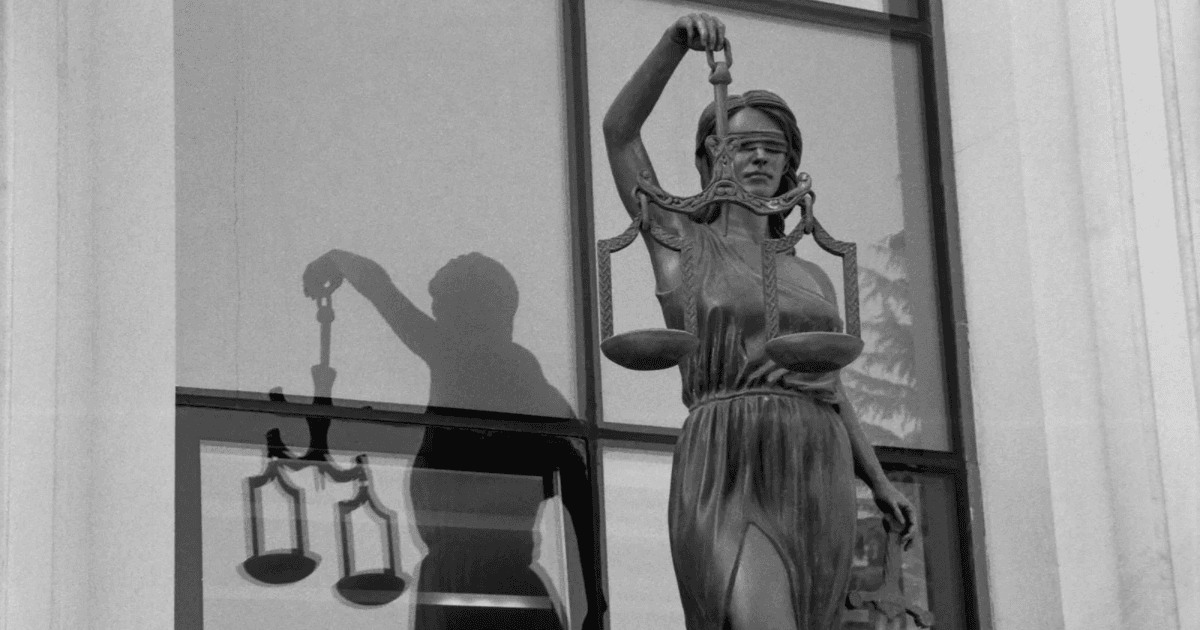
Living in a country that observes the rule of law is a lot like living in a house with sound plumbing, wiring, and a good roof. When it works, nobody thinks about it. Only when a pipe bursts or the roof leaks does anyone notice how much depended on work they never saw.
The rule of law is that kind of infrastructure for freedom. It lets an American plan a career, buy a home, start a business, sign a contract, or criticize an elected official without first wondering whether the rules will hold.
Like any infrastructure, the rule of law does not maintain itself. It lasts only as long as the people who hold power agree to follow it too.
Thomas Jefferson and Abraham Lincoln both appealed to rule-of-law principles in their first inaugural addresses. The country's history includes real injustice, but its practice has been to fix the laws and institutions that fell short rather than give up on the principle.
An important part of the rule of law is that even a law people dislike is expected to be enforced the same way for everyone until it is changed through proper means.
In plain terms, the rule of law rests on four ideas:
- Laws apply to everyone equally. No one, whatever their wealth, party, or office, is above the law, and no one is beneath its protection.
- Laws are known and predictable. They are clear and public, and no president, governor, or mayor may ignore or rewrite them for personal or political reasons. Laws also apply only going forward. Something that was legal when someone did it cannot be made a crime afterward. The Constitution bans such laws.
- Justice happens in the open, so citizens can see how the law is being applied and to whom.
- Justice is not politicized. Judges apply the law without fear, favor, or party loyalty. Police and prosecutors are expected to meet the same standard, even though they work for the executive branch and are not independent the way courts are.
Where these principles hold, people have personal liberty. Where they protect property and enforce contracts, people have economic freedom.
Beneath all four sits the promise of the Declaration of Independence: life, liberty, and the pursuit of happiness are God-given rights people are born with, not favors the government hands out.
Where rights are treated as given by the state, the people in power can use laws, judges, and trials for political or personal ends. Citizens lose the ability to predict how the government will treat them.
Russia shows how that works. Its tax laws, business regulations, and anti-extremism laws are written so broadly and vaguely that the government can use them as weapons whenever it likes. Officials and oligarchs loyal to the regime break those same laws without consequence.
A business owner who refuses to pay extortion, or anyone who speaks out against the government, can expect trouble. Mikhail Khodorkovsky and Alexei Navalny both crossed the Kremlin. Both had their property seized and went to prison. Navalny died there.
Stalin's secret police chief, Lavrentiy Beria, is said to have summed up the method by saying, "Show me the man, and I'll find you the crime." In a country run that way, the legal system stops protecting citizens and is used against them.
A similar dynamic affects economic freedom. People put time and money into a business because they trust the government to protect property rights. Venezuela shows what the same failures do to an economy.
Before Hugo Chávez was elected president in 1998, Venezuela was among the wealthiest countries in Latin America, despite real political and economic strain. Over the next 28 years, Chávez and his successor, Nicolás Maduro, nationalized private businesses and seized foreign-owned oil rigs and farms. They tore up contracts without paying for what they took.
Strict government limits on currency made it hard for businesses to operate, earn a profit, or move money out of the country. Success came to depend on bribes and political connections rather than good work.
Production collapsed, capital fled, hyperinflation set in, and poverty spread. Almost every foreign company left.
Today Venezuela is the poorest country in South America. Its economic output is about $4,140 per person, and in Latin America only Honduras, Nicaragua, and Haiti rank lower.
The rule of law is the reason why a mortgage signed this year means the same thing in twenty years. It is why a family business can keep what it earns. It is why a letter to the editor criticizing the mayor doesn't bring a surprise inspection.
The warning sign is rarely one dramatic act. It is enforcement that starts to depend on who someone is. A law gets pushed hard against opponents and waved away for allies, or a rule is set aside because those in charge want a different result.
A companion piece, "Is the Rule of Law Eroding in America?", looks at how leaders of both parties have handled those tests at home.
Nobody checks the roof on a sunny day. By the time the ceiling stains, the water is already inside.
Related issues
- FoundationsIs the Rule of Law Eroding in America?
Leaders of both parties have gone around Congress and aimed law enforcement at their opponents, and so far the courts have held the line.
Oct 1, 2026 · 5 min - SocialismBritain Voted for Public Ownership. West Germany Didn't. Thirty Years Later, the Gap Was Clear.
Same freedoms, same alliance, both rebuilding from the war. Different owners, and very different results.
Oct 12, 2026 · 4 min - SocialismFree Health Care: What It Actually Costs
Health care at no cost to the patient still comes with a bill: about $3 trillion a year in new federal spending.
Sep 28, 2026 · 4 min
Stay informed
Plain-language explainers and sourced updates, in your inbox. No spin, unsubscribe anytime.